Sustainable Leggings
Eco-friendly leggings made from recycled and organic materials — low-impact production, fair-wage manufacturing, and built to last. Better for your body and the planet.
- Eco-Friendly
- Recycled
- Certified
- Low Impact
- Ethical

What Conventional Leggings Really Cost the Planet
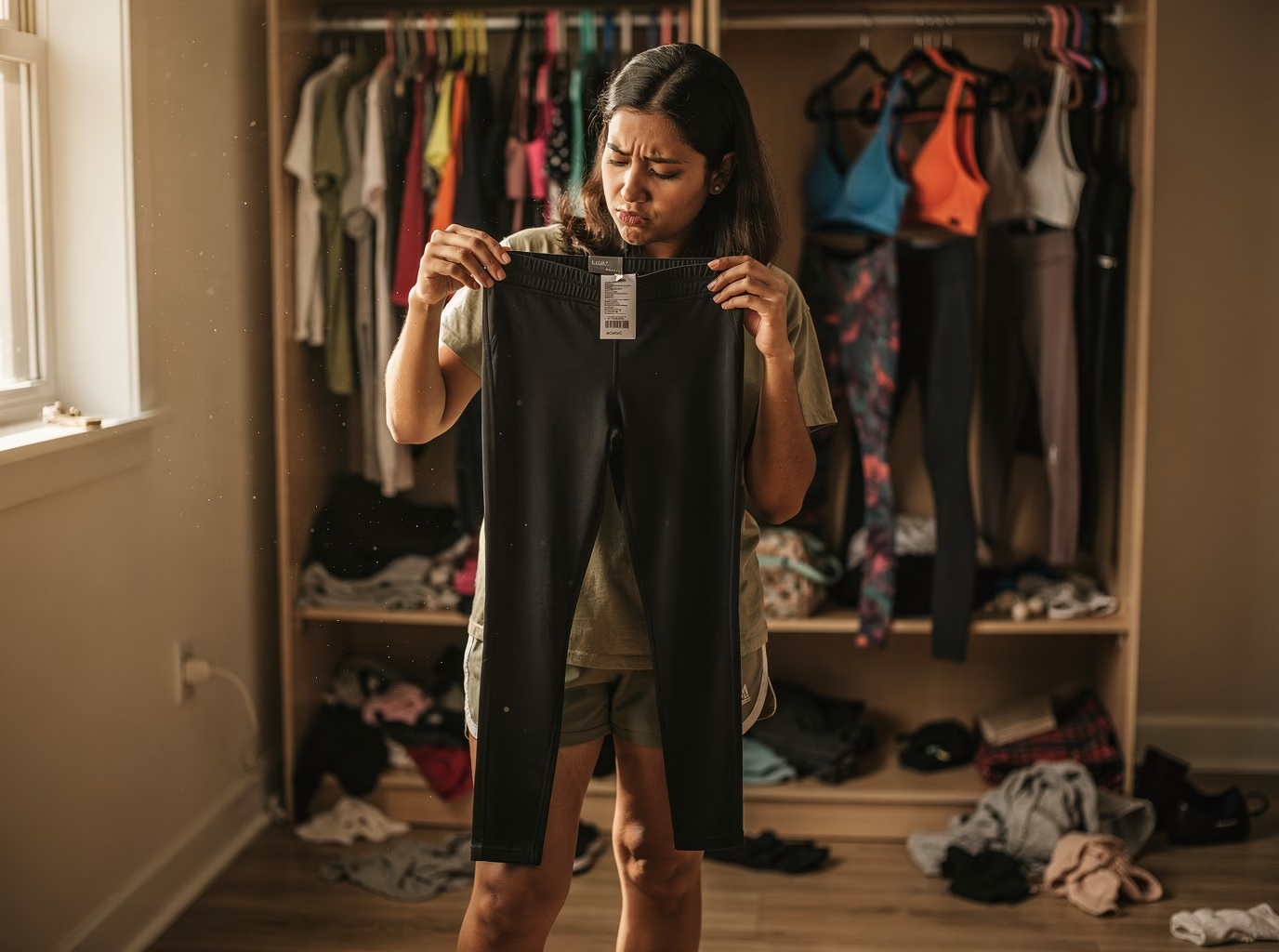
The leggings in your drawer right now have a secret. They won’t tell you where the fibre came from. They won’t mention the fossil fuels woven into every thread. They won’t show you who sewed them, or what rivers absorbed the dye, or how many times they’ll shed invisible fibres in the wash before you throw them away.
You didn’t know. How could you? The industry designed it that way.
Most conventional leggings are born from crude oil. Spun in factories you’ll never see. Dyed with chemicals that don’t stay in the fabric. Packaged to be worn for a season, then discarded.
You put them on before sunrise. You stretch in them. You sweat in them. You wash them. And every single time, a tiny piece of their hidden cost washes away with the rinse water.
The worst part? You never agreed to any of it. You just wanted something comfortable that fit well. That wasn’t a mistake. The system simply never gave you a real choice.
You didn’t choose this system. But you can choose what happens next.
Why Sustainability in Leggings Starts With You
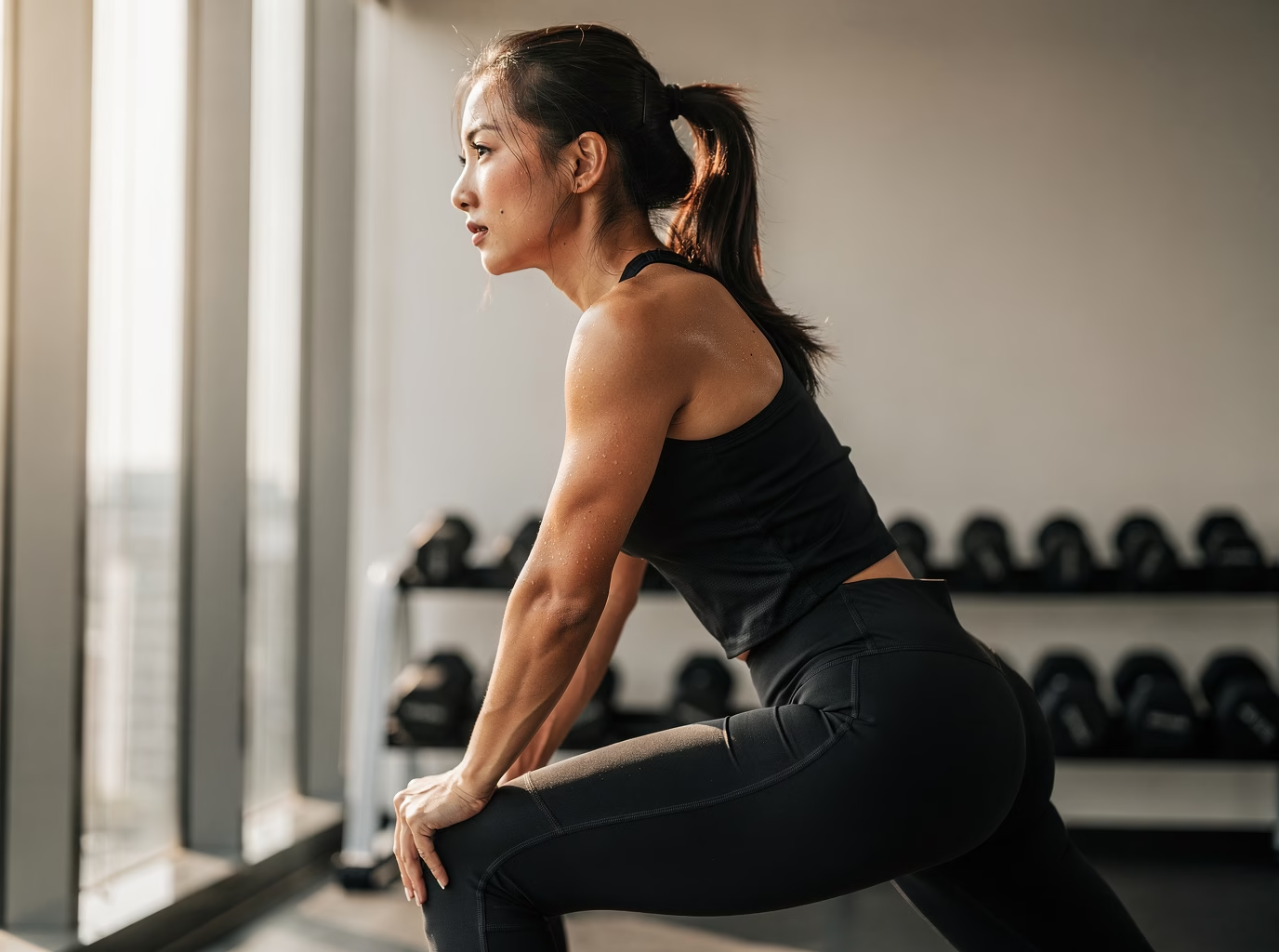
These aren’t outerwear. They’re against your skin. For hours. While you bend, breathe, sweat, and move. That matters.
What touches your body matters. What you wash down the drain matters. What you replace every six months matters. The person who stitched the waistband at three in the morning matters.
Now that you know what the lifecycle actually looks like, you want something that matches your values.
That desire is honest. It’s powerful. And it’s exactly where real change starts.
You aren’t a villain for owning sustainable leggings. You’re someone who cares.
What you wear against your skin is personal. Now it can be a choice you’re proud of.
What Fast Fashion Does to Keep You Buying More
Every cheap pair that falls apart after twenty washes teaches the same lesson: make more, wear less, replace faster.
The cycle demands new fossil fuel extraction. It demands water. It demands labour kept invisible and underpaid. It demands that your leggings — perfectly functional last year — become landfill material this year.
And the cost compounds. The more leggings you burn through, the more the system wins. That quiet frustration? The drawer full of faded, sagging pairs you can't quite throw away? That's the symptom.
The real problem isn’t your closet
The disease is a system that treats leggings as disposable. Designed to fade, fray, and fail — so you buy again. The cycle feeds itself, and your repeat purchases fund the very problem you wish would disappear.
You're trapped in a loop that was built to keep you buying, not keep you satisfied.
The system was designed to keep you replacing. Sustainable leggings are designed to keep you.
What Changes When You Switch to Sustainable Leggings

Now imagine this instead. You reach into your drawer and pull out a pair you trust. Not just because they fit — because you know their story. You know the fibre didn't start as crude oil pulled from the ground. You know the fabric was dyed with methods that don't poison waterways. You know the hands that made them were treated with dignity.
That knowledge sits in your chest like a held breath finally released.
You pull them on. The fabric feels weighty and honest against your skin. Not flimsy. Not disposable. The waistband grips without crushing. The stretch recovers. The colour holds. You look down and see opacity you can count on — no see-through panic in downward dog, no embarrassing thin spots under morning light.
These feel like they were built to stay.
You wear them through a full workout. They wick. They breathe. They don't sag in the knees or bag at the seat. When you peel them off, they smell like effort, not chemicals.
You wash them less often because they stay fresher longer. When you do wash, it's cold water, gentle cycle, hung dry. They come out ready again. Months pass. A year. Maybe two. The fabric softens but doesn't weaken. The seams hold. You reach for them again and again because they keep their promise.
And the emotional shift runs deeper than the fabric.
That quiet weight you used to carry — the vague suspicion that your clothes were part of something ugly — it lifts. You don't have to pretend anymore. When someone compliments your leggings, you can tell them the truth: these were made with intention, from materials that had a past before they became fabric, by people who were seen.
There's a moment. Maybe it's a Saturday morning. Coffee in hand. Sun through the window. You're wearing them for a slow walk to the market, or just stretching on your living room floor. You feel the softness. You remember what they're made of. And you smile — not because you're perfect, but because this one choice finally aligns with who you're becoming.
That feeling is what you're really buying.
Not just leggings. A choice that finally feels like yours.
What Sustainable Leggings Actually Mean — and What They Don't
"Sustainable" isn't a magic word. It doesn't mean zero impact. It means honest effort across the entire lifecycle.
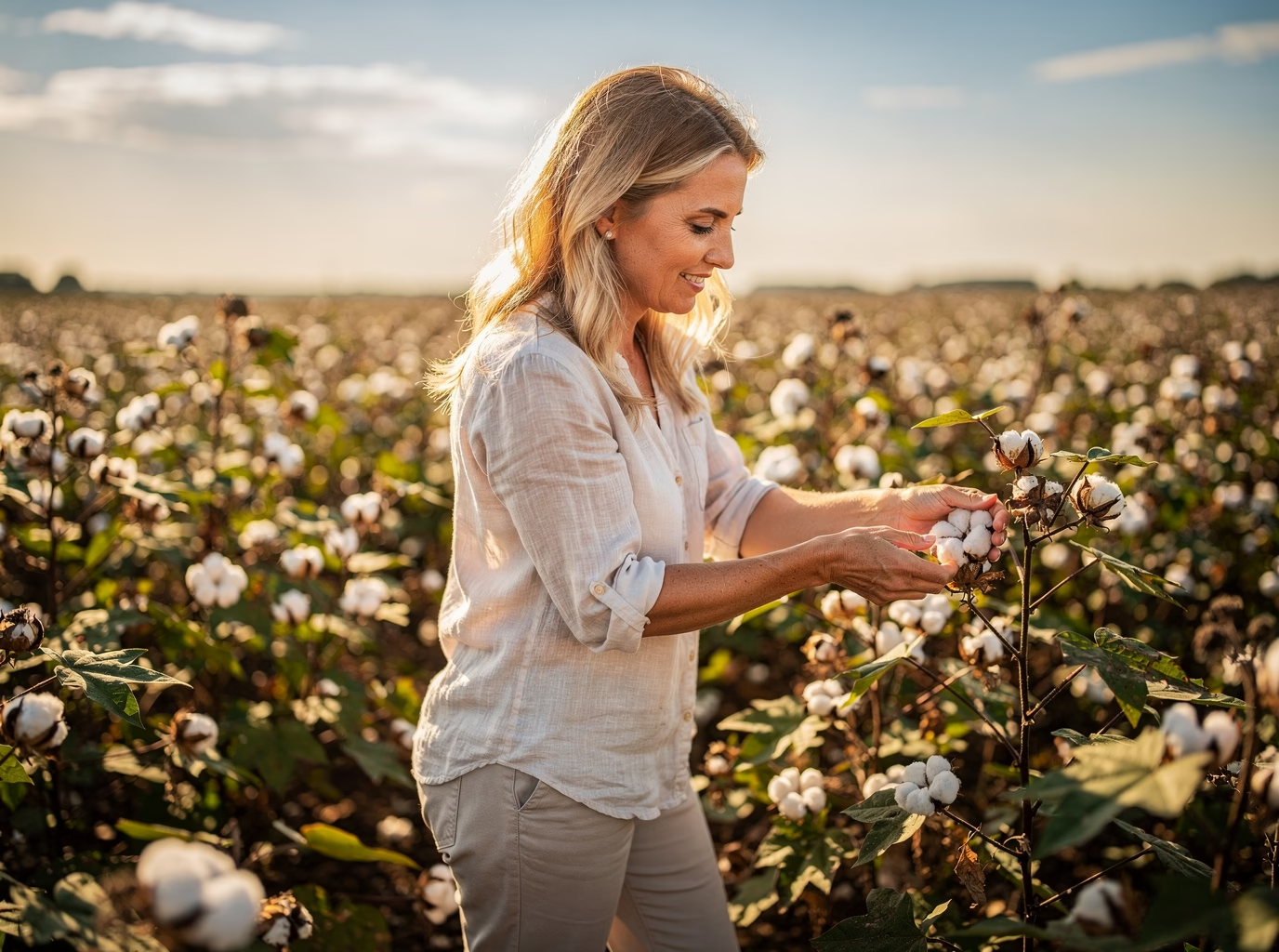
A sustainable legging might use recycled fibres — giving plastic bottles a second life rather than drilling for fresh oil. It might use organic plant-based fibres grown without synthetic pesticides. It might use wood-based cellulose fibres sourced from responsibly managed forests. It might blend these with small amounts of bio-based stretch to keep performance real.
But there are no perfect materials.
Recycled fibres still shed micro-particles in the wash. Organic crops still need land and water. Wood-based fabrics still require chemical processing that demands clean energy to stay low-impact. Blended fabrics — the kind that give leggings their hold and recovery — are genuinely harder to recycle at end-of-life.
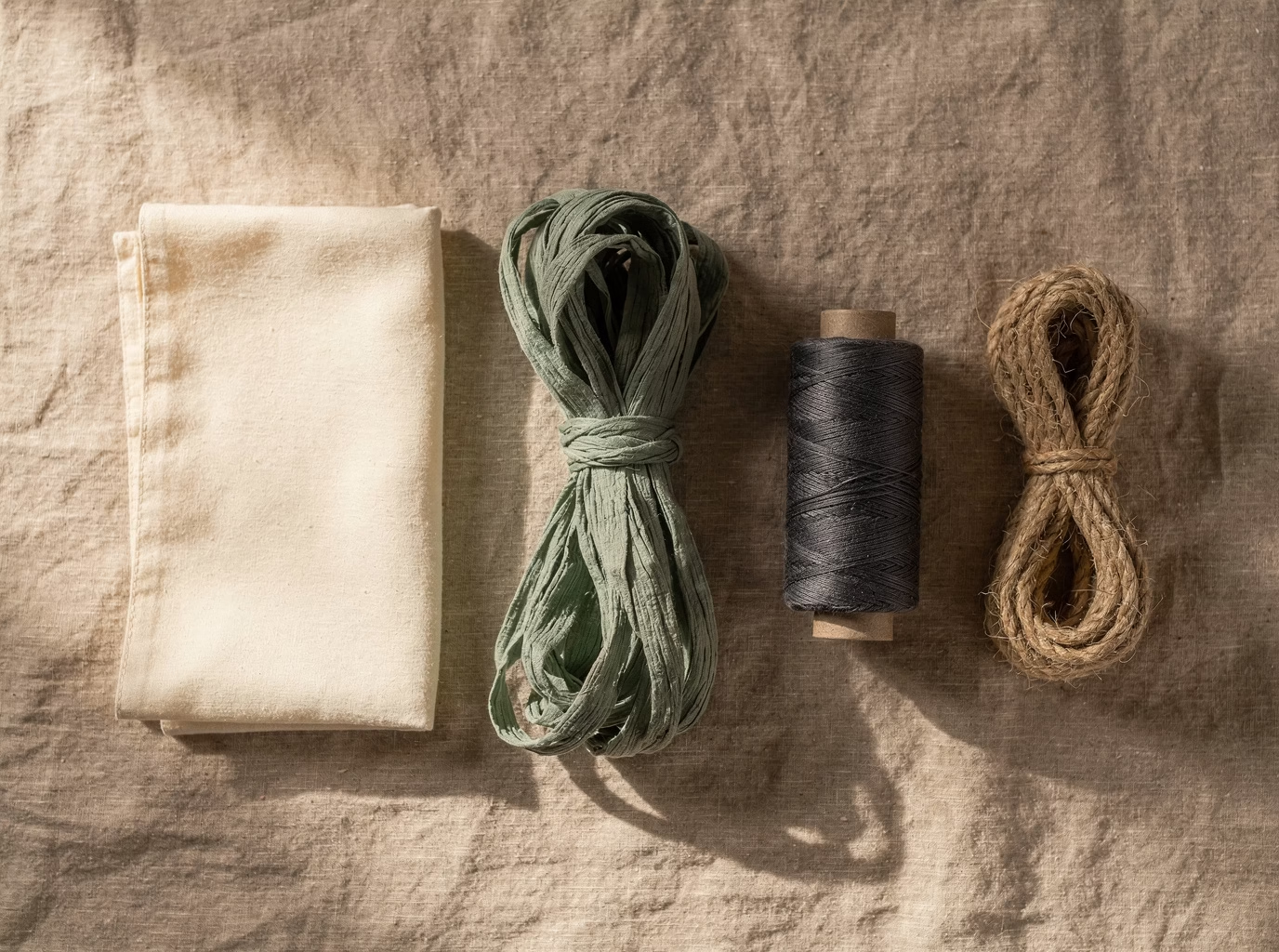
Sustainability is not a destination. It's a direction. The honest brands admit the trade-offs. They show their work. They design for durability first — because a legging that lasts four years undercuts the need for four replacements.
That's the real win. Not purity. Just better. Measurably, verifiably, noticeably better.
Sustainable leggings aren't claiming perfection. They're claiming honest effort across the entire lifecycle.
Not purity. Just better. Measurably, verifiably, noticeably better.
You Know Enough to Choose Sustainable
Every pair in our sustainable leggings collection was chosen for its full-lifecycle integrity — from fibre sourcing to factory conditions to how it feels against your skin after the hundredth wear. They're built to stay in your rotation for years, not weeks. To recover after every wash. To carry you through workouts, rest days, and everything in between without asking you to ignore the truth. Browse the collection below. Find the pair that matches your life — and your values.
Sustainable Is the Big Picture for Leggings — Here Are the Pieces
Sustainable tells you about the full environmental impact. It’s one of five questions that determine whether your leggings are genuinely clean. Here’s how the others fit.
Sustainable Leggings
The big picture — carbon, water, waste, labour, circularity across the whole supply chain. Sustainable leggings ask the broadest question of all: not just what’s in them, but how they were made, who made them, and what happens after you stop wearing them. You’re here.
Organic Leggings
How the fibre was farmed. Organic is one dimension of sustainability, not the whole story. Organic leggings tell you the cotton or bamboo was grown clean — but sustainability also asks how much water that farming used and how far the fibre travelled.
Read more →Non-Toxic Leggings
What’s in the finished product. Sustainability includes chemical safety, but asks a broader question. Non-toxic leggings cover what touches your skin — sustainability asks whether the factory that dyed them dumped that same chemistry into the river.
Read more →PFAS-Free Leggings
No forever chemicals. Avoiding PFAS matters for sustainability, but it’s one specific exclusion. PFAS-free leggings remove a single category of harm — sustainability asks whether the whole production chain is built to last or built to be thrown away.
Read more →What Sustainability Certifications Mean

Sustainability in leggings is not one claim — it is a chain of claims. How was the fibre grown? How much water was used? What came out of the factory smokestack? Were the materials recycled or virgin? These seals answer those questions with verified data, not aspirations.
GOTS — Global Organic Textile Standard
Eliminates synthetic pesticide runoff from cotton farming and enforces strict wastewater treatment at the factory. The environmental baseline for sustainable textile production — from soil health to water discharge.
OCS — Organic Content Standard
Verifies the organic fibre content through chain-of-custody tracking. For sustainable blends that mix organic with recycled or conventional materials, OCS confirms the organic portion is real and traceable.
ROC™ — Regenerative Organic Certified
The deepest sustainability claim in agriculture — farms that are not just reducing harm but actively restoring ecosystems, sequestering carbon, and rebuilding soil that was depleted by decades of conventional farming.
B Corp
Assesses the company’s entire environmental footprint — climate impact, water use, land stewardship, and biodiversity. A B Corp has proved it weighs sustainability in every business decision, not just its marketing.
EU Ecolabel
The EU’s official mark for environmental excellence across the full lifecycle — raw material extraction, production, use, and disposal. Restricted water pollution, limited energy use, and proven fibre sourcing, all in one seal.
FSC® — Forest Stewardship Council
Ensures the wood pulp behind lyocell and TENCEL™ fibres comes from responsibly managed forests — protecting biodiversity, preventing deforestation, and maintaining the ecosystems that absorb carbon.
Cradle to Cradle Material Health Gold
Evaluates circularity — whether the material can safely return to the environment or be reclaimed for reuse. Gold means the fibre was designed for a closed-loop future, not a landfill.
bluesign®
Audits resource productivity at the factory — water consumption, energy use, emissions to air and water. A bluesign®-approved fabric was produced with measurable environmental controls at every step.
The Climate Label (Climate Neutral)
Measures the full supply chain carbon footprint and requires a reduction plan with year-over-year cuts. Not offsetting and calling it done — measured, planned, reduced, then funding climate solutions for the rest.
Climate Neutral Certified
Company-level certification requiring measurement, reduction, and offsetting of all scope 1, 2, and 3 emissions — re-verified every twelve months. No annual reduction, no renewal. Climate accountability on a rolling deadline.
GRS — Global Recycled Standard
Verifies recycled material content at every stage of the supply chain — the recycling facility, the spinner, the knitter, the finisher. When a legging says 83% GRS-certified recycled nylon, that number was independently checked.
1% for the Planet
A structural commitment — 1% of annual sales donated to vetted environmental organisations. Not a one-time gift for PR, but a recurring obligation verified annually by the 1% for the Planet network.
WRAP — Worldwide Responsible Accredited Production
Certifies the factory meets environmental and safety standards — including waste handling, emission controls, and responsible resource management on the production floor where the leggings were made.
The Best Stores for Sustainable Leggings
These stores all ship globally and carry leggings whose sustainability claims are backed by specific materials, production practices, and third-party credentials — but “sustainable” is not one universal certification, so we explain the actual basis behind each brand’s claim rather than treating it as a single label.
MATE the Label
- Full-length leggings
- Midi leggings
- Crossover leggings
- Bootcut leggings
- Sports bras
- Biker shorts
- Unitards
- Tops
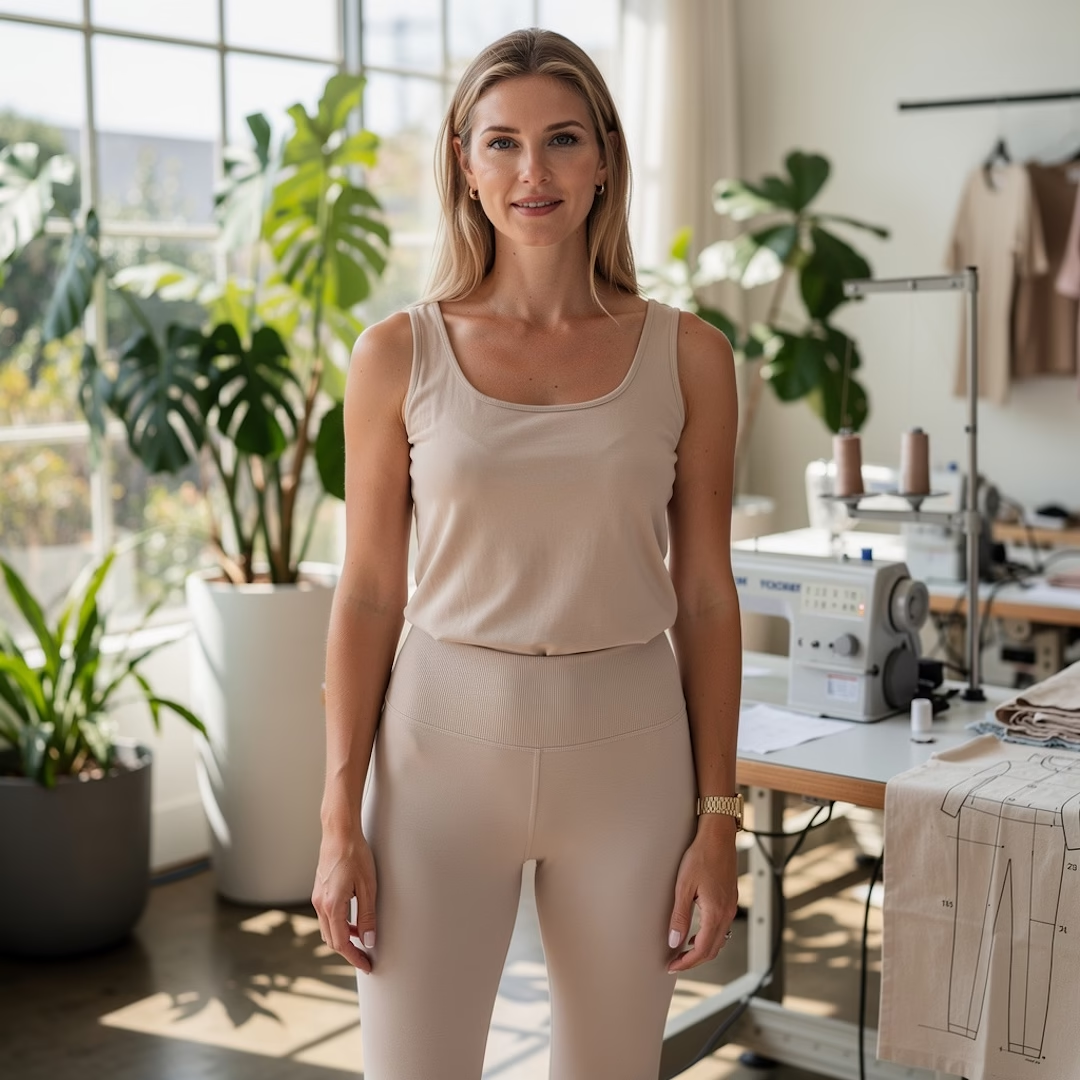
MATE the Label builds sustainability around local, transparent production in Los Angeles and certified organic materials. Their Organic Stretch fabric is 92% organic cotton and 8% spandex, and the cotton carries GOTS certification, which restricts toxic inputs and requires environmentally responsible manufacturing. The brand holds The Climate Label certification for measuring and reducing its environmental impact and is a Certified B Corp, meaning it meets verified standards for social and environmental performance across its operations.
Price range: $58-$108 (leggings $88-$108)
Shop MATE the Label
Tripulse
- Original leggings
- Pro leggings with hidden pockets
- Sports bras
- Shorts
- Tops
Tripulse’s Original leggings are 84% TENCEL Lyocell and 16% ROICA V550 stretch fibre. The TENCEL Lyocell is derived from FSC and PEFC certified eucalyptus and pine forests and produced in a closed-loop system where 99% of water and solvents are recovered and reused — the fibre supply also carries the EU Ecolabel. The ROICA V550 component holds Cradle to Cradle Certified Material Health Gold for its material safety profile. Tripulse is Climate Neutral Certified, and their manufacturing partner facility is GOTS-certified at the facility level, though the finished leggings themselves are not GOTS-certified.
Price range: $40-$130
Shop Tripulse
Lezat
- 7/8 leggings
- Bootcut flare leggings
- Capri leggings
- Jumpsuits
- Sports bras
- Tanks
- Joggers
Lezat’s Sara leggings are 95% GOTS-certified organic cotton and 5% bio-based spandex, combining certified organic fibre content with a plant-derived stretch component rather than conventional petroleum-based elastane. Production is in California, which keeps their carbon footprint low through shorter supply chains and domestic manufacturing. Lezat holds Climate Neutral certification, reported through December 2024 — verify the certificate is still current before relying on it as a live credential. The brand is female-founded and based in Los Angeles.
Price range: $48-$98 (leggings $88-$98)
Shop Lezat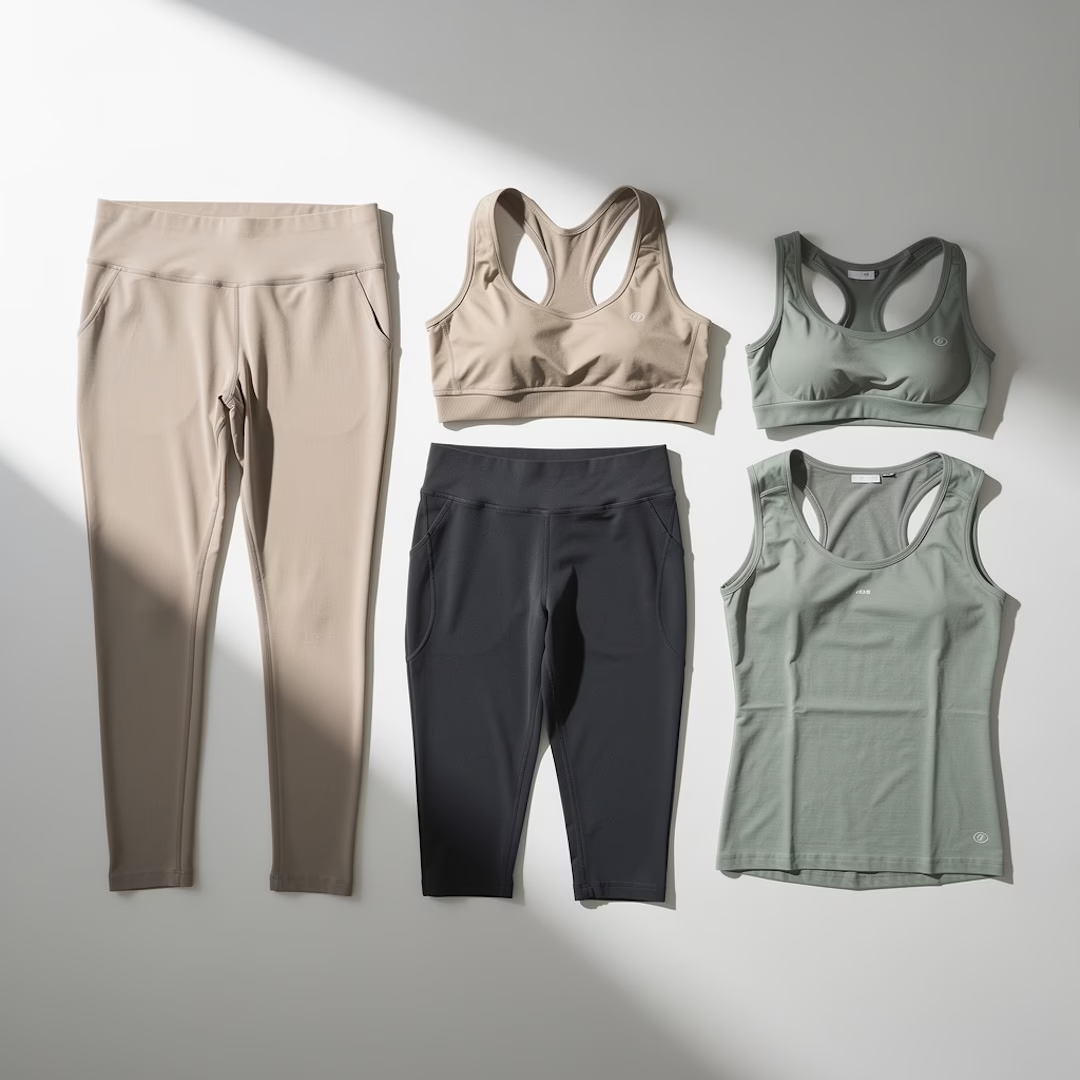
Organic Basics
- Active leggings
- Flare leggings
- Wide leg pants
- Joggers
- Drawstring pants
- Sweatpants
- Bike shorts
- Shorts
Organic Basics approaches sustainability through material choice — offering both organic cotton and recycled nylon products, each certified for its specific content. Their Active Leggings are made with 60% GRS-certified recycled nylon and 40% elastane, where GRS verifies the recycled content through the supply chain. Their organic cotton bottoms carry GOTS or OCS certification, depending on the product. The brand is a Certified B Corp and a 1% for the Planet member, though those are company-level commitments rather than product certifications. Different products carry different credentials, so check the label on each item.
Price range: $29-$90
Shop Organic BasicsSustainable Leggings — Your Questions Answered
The things people ask before making the switch to leggings that last.
Are sustainable leggings the same as organic leggings?
Not necessarily. Organic is about how the fibre was farmed — no synthetic pesticides, no GMOs. Sustainable is about the full lifecycle: what the fabric is made from, how it’s produced, who makes it, and how long it lasts. A legging can be organic without being sustainable (if it’s produced unethically or falls apart quickly), and a legging can be sustainable without being organic (like recycled polyester that gives plastic bottles a second life). They’re different questions with different answers.
What makes leggings sustainable?
Sustainable leggings are judged by their full lifecycle. That includes the material chosen (recycled, organic, or responsibly sourced), how it became fabric (clean dye methods, low-water processing), who did the work (fair wages, safe conditions), and how long the garment genuinely lasts. A legging that lasts four years undercuts the need for four replacements — durability is a sustainability feature.
Do sustainable leggings last as long as conventional ones?
Good ones last longer. Sustainable leggings are often built for durability first — stronger seams, better recovery, dyes selected to endure rather than to look good on a sales rack. The whole point is that a legging which lasts four years undercuts the need for four replacements. Cheap conventional leggings are often designed to fade, fray, and fail so you’ll buy again.
Can sustainable leggings handle intense workouts?
Yes. Sustainable leggings use performance blends — recycled polyester for wick and stretch, organic cotton for breathability, wood-based cellulose for softness and drape. They wick, they breathe, they recover their shape after every wash. The bio-based stretch fibres keep performance real without the chemical load of conventional elastane.
Are recycled polyester leggings actually better for the environment?
Recycled polyester gives plastic bottles a second life rather than drilling for fresh oil, which is a genuine improvement. But it’s not perfect — recycled fibres still shed micro-particles in the wash. The honest brands admit this trade-off. The real win isn’t purity; it’s measurably better. A recycled legging that lasts four years is still better than four conventional ones that end up in landfill.
How do I know if a brand’s sustainability claims are real?
Look for brands that show their work. Honest brands admit the trade-offs, publish their factory conditions, and design for durability first. Vague claims like ‘eco-friendly’ without evidence mean little. What matters is whether they can tell you what the fabric is, where it came from, who made it, and what happens at end-of-life. Transparency is the baseline.
Latest Articles
What women are reading about non-toxic and organic leggings
The Recycled Polyester Myth: Why Bottle-to-Legging Recycling Breaks Circularity
How the "Eco" Leggings Story Brands Sell You Hides a Broken Loop That Sheds More Plastic, Not Less Your leggings carry a feel-good label. Recycled…
Read more
What the WHO’s New Report Reveals About Chemicals in Your Leggings
A Landmark 2026 Assessment Links PFAS and Other Textile Treatments to Fertility, Thyroid, and Metabolic Risk On November 17, 2026, the World Health Organization and…
Read more
Fall 2026 Activewear Arrived With Certification Numbers on the Hangtags
What MATE the Label, Earthletica, and Urban Goddess Are Doing With GOTS, OEKO-TEX, and OCS That Mainstream Labels Still Skip This season, three independent labels…
Read more