
How the “Eco” Leggings Story Brands Sell You Hides a Broken Loop That Sheds More Plastic, Not Less
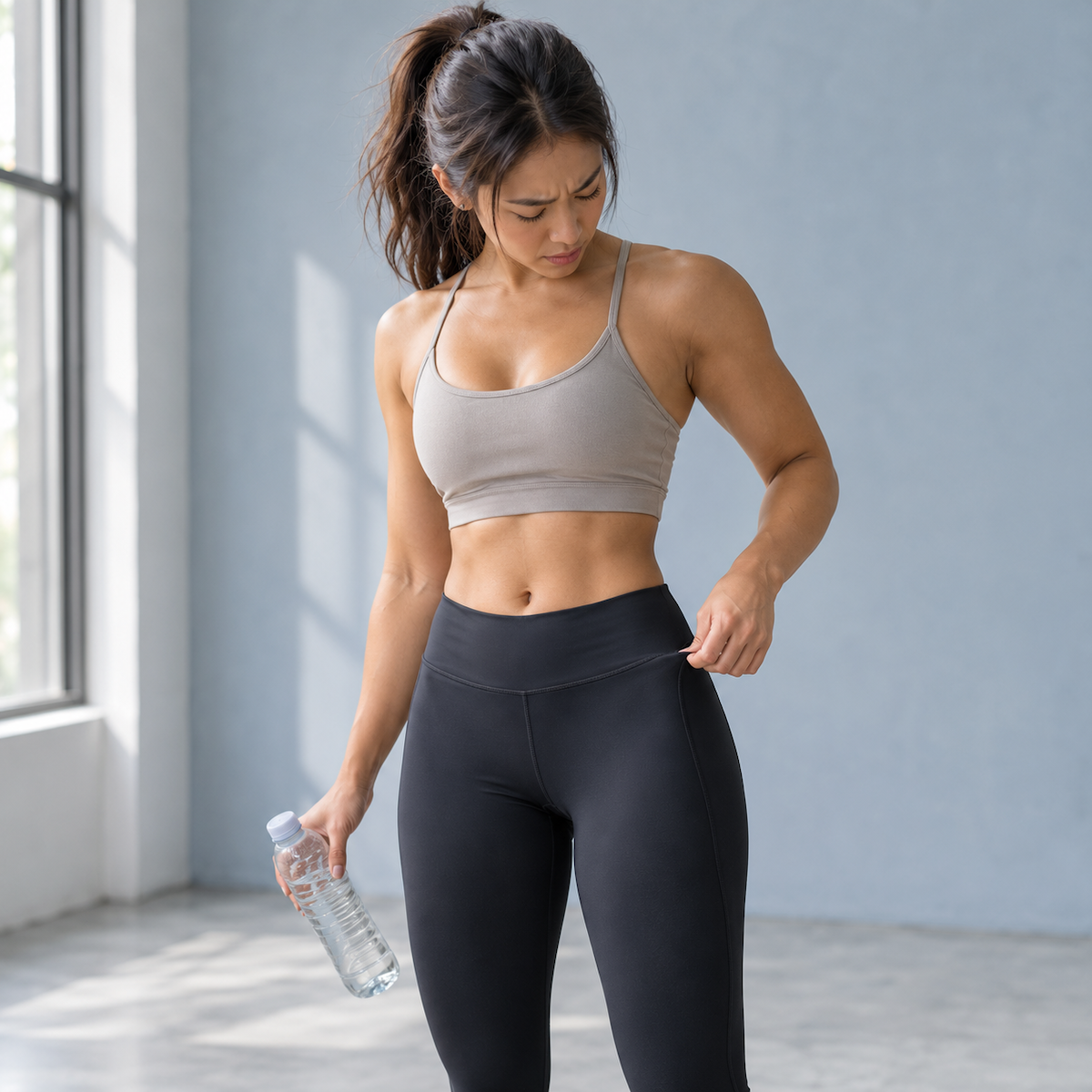
Your leggings carry a feel-good label. Recycled polyester. rPET. MADE FROM RECLAIMED PLASTIC BOTTLES. The message is clear: you are keeping waste out of landfills and oceans. You are part of the solution.
Here is what the label does not say.
About 98 percent of recycled polyester used in apparel does not come from old clothes. It comes from PET drink bottles. Textile-to-textile recycling makes up less than 1 percent of supply, per the Textile Exchange Materials Market Report 2025. Your leggings are not part of a closed loop. They are the end of one.
And once that bottle becomes a legging, it cannot become a bottle again. It cannot become much of anything.
From Bottle to Legging: The 98 Percent Pipeline
PET bottle-to-bottle recycling works because bottles are simple. They are uniform, clean, and collected in massive volume. When PET stays a bottle, it can be recycled multiple times without major quality loss. The loop closes. The material stays useful.
Activewear is the single largest apparel category using recycled polyester. That makes leggings a primary destination for bottle-derived rPET.
But the moment a bottle gets shredded, melted into yarn, dyed, blended with elastane, and sewn into a garment, that clean loop breaks. The plastic is no longer a bottle. It is now a complex textile product mixed with other fibers, dyes, and finishes. Mechanical textile recycling cannot easily reverse that at scale. The material is locked into a form with nowhere else to go.
Downcycling by Definition
The Ellen MacArthur Foundation classifies this exact path — bottle to garment — as downcycling. Material quality drops. Future recycling options shrink. Most polyester clothing cannot be recycled again. It ends up in landfill or incineration.
That is not circularity. That is a detour to disposal wearing a halo.
The Microfiber Gap Nobody Talks About
Recycled polyester does not just break the loop. It accelerates the pollution.
Mechanical recycling shortens polymer chains. The result is more fragile fibers. Research by Cukurova University, commissioned by the Changing Markets Foundation, found that recycled polyester sheds 55 percent more microfibers during washing than virgin polyester. The count? Roughly 12,000 fibers per gram versus 8,028. And the recycled fibers were smaller, making them more likely to travel through ecosystems and penetrate tissues.
Studies estimate a single laundry load of synthetic garments can shed 700,000 to 1 million microfibers into wastewater. Your washing machine is not prepared to catch them. Water treatment plants miss most of them.
Despite the green branding, recycled polyester does not solve microplastic pollution. It worsens it.
Tight Fit, High Friction, Wide Skin Contact: a Perfect Storm
Leggings multiply this problem in three specific ways.
First, they are tight-fitting. They sit in continuous contact with large areas of skin.
Second, they are worn during high-friction exercise. Movement against skin and machine friction in the wash both increase fiber release.
Third, they cover a large surface area — hips, thighs, calves — with minimal gaps. More fabric touching skin. More microfibers shedding into the environment with every wear and every wash. More opportunity for particles small enough to penetrate tissue to make contact with the body.
The garment marketed as “eco-friendly” becomes a double liability: a dead-end material loop and an elevated microplastic emitter pressed against your largest organ for hours at a time.
When 99 Percent Recycled Still Means Broken
Major brands have built marketing stories around recycled polyester.
- Adidas reports 99 percent recycled polyester use.
- H&M reports 94 percent.
- Patagonia reports 93.6 percent.
The catch? Almost all of it comes from bottles, not textile waste. These brands are occupying a feedstock that already had a working recycling system. They are not closing a fashion loop. They are intercepting a beverage loop and breaking it.
And here is the kicker. Despite all the recycled polyester messaging, overall recycled polyester market share fell from 12.5 percent to 12 percent because virgin polyester production grew even faster. The narrative outpaced the math.
The Beverage Industry’s Warning to Brussels
The fight is not just academic. Since 2021, the beverage industry has urged EU policymakers to stop fashion from downcycling bottles into textiles. Their argument is simple and hard to refute: bottle-to-bottle recycling is a closed-loop system that actually works. Fashion is disrupting it.
The EU listened partially. Regulations now mandate that by 2030, textile products must be durable and largely recycled. But the infrastructure for genuine textile-to-textile circularity does not yet exist at scale. Brands cannot currently comply in the way the word “recycled” implies. The gap between law and practice is years wide.
The Real Circular Choice
The most sustainable outcome for a plastic bottle is to remain a bottle. It can be recycled again and again without the quality collapse that happens when it becomes apparel.
For leggings, the fix is not a better recycling machine. It is a different material entirely.
Choosing certified organic cotton or other natural-fiber alternatives removes both problems at once. No downcycling trap. No microfiber shedding into waterways, soil, and tissue. No complex polymer blends that make end-of-life recycling impossible. The loop is not broken — because the material is designed to return to the earth cleanly.
Your money shapes where plastic goes. Feed a broken loop with synthetic activewear, and you fund more microfiber pollution wrapped in green language. Shift it to certified organic fibers, and you signal that “circularity” must mean something real — or it means nothing at all.