
Organic Leggings
Natural leggings in organic cotton and bamboo — softer on your skin, breathable, and free from harmful chemicals.
- Organic
- Certified
- Natural Fibers
- Skin-Friendly
- Sustainable

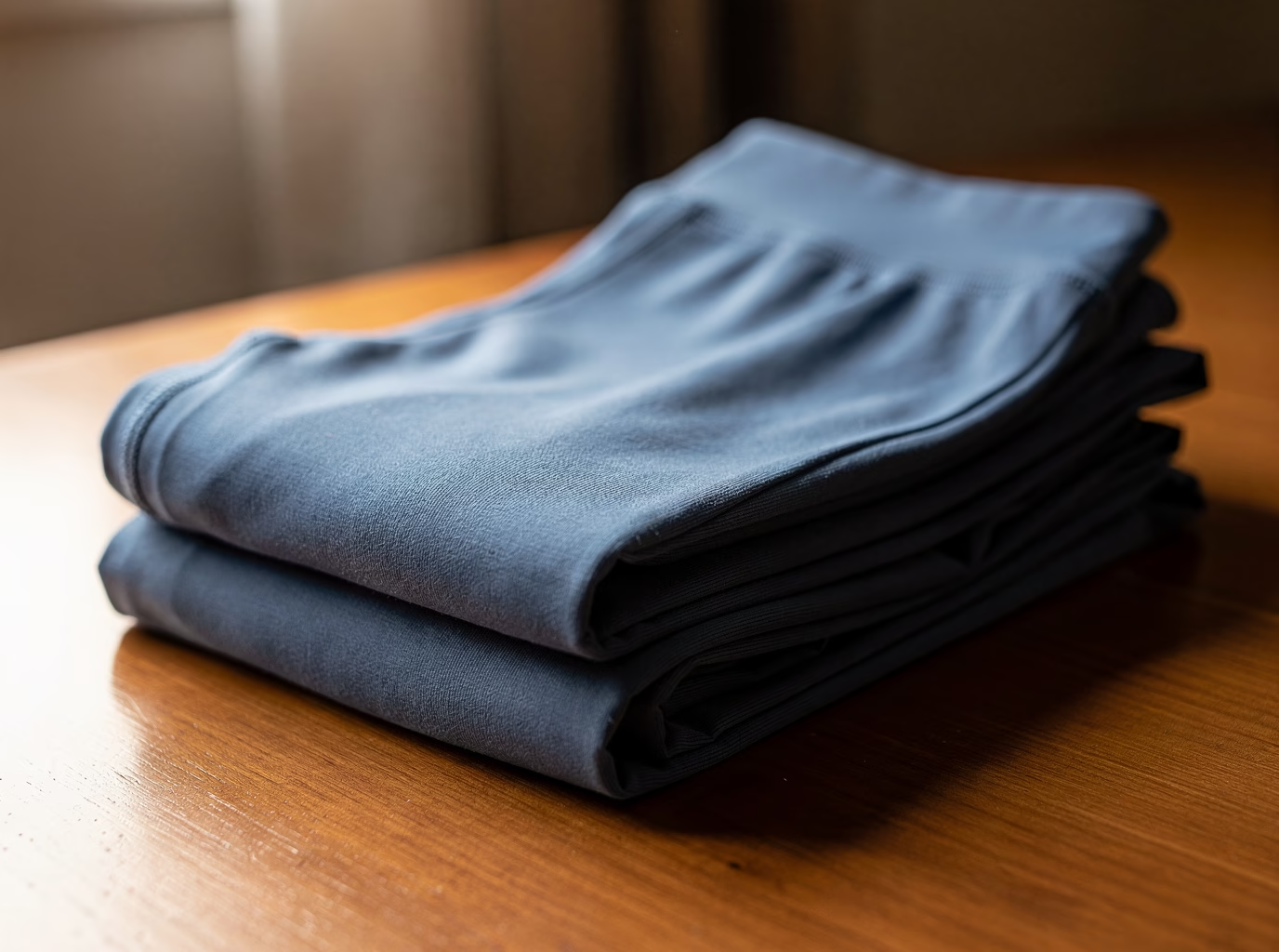
What’s Really in Your Conventional Leggings
Your conventional leggings carry a hidden cargo.
Formaldehyde resins. Heavy-metal dyes. Antimicrobial biocides. PFC coatings.
These are not rare contaminants. They are standard manufacturing tools. Factories rely on formaldehyde to keep fabrics crisp and wrinkle-free. Heavy-metal dyes lock color into cheap synthetics so it doesn’t bleed in the first wash. Antimicrobial biocides kill odor-causing bacteria so you can wear polyester five times before it reeks. PFC coatings add water resistance that beads off raindrops and sweat.
Chemists design these chemicals to survive washing. They bond with fibre and stay there. Through ten washes. Through fifty. Through every hour you wear them.
You never see them listed on the tag. They have no smell. They feel perfectly normal against your fingers in the store.
But that chemical load travels home with you. It sits in your drawer. And it presses against your skin every single time you pull those leggings on.
Your Leggings Sit Closer to Your Skin Than Anything Else
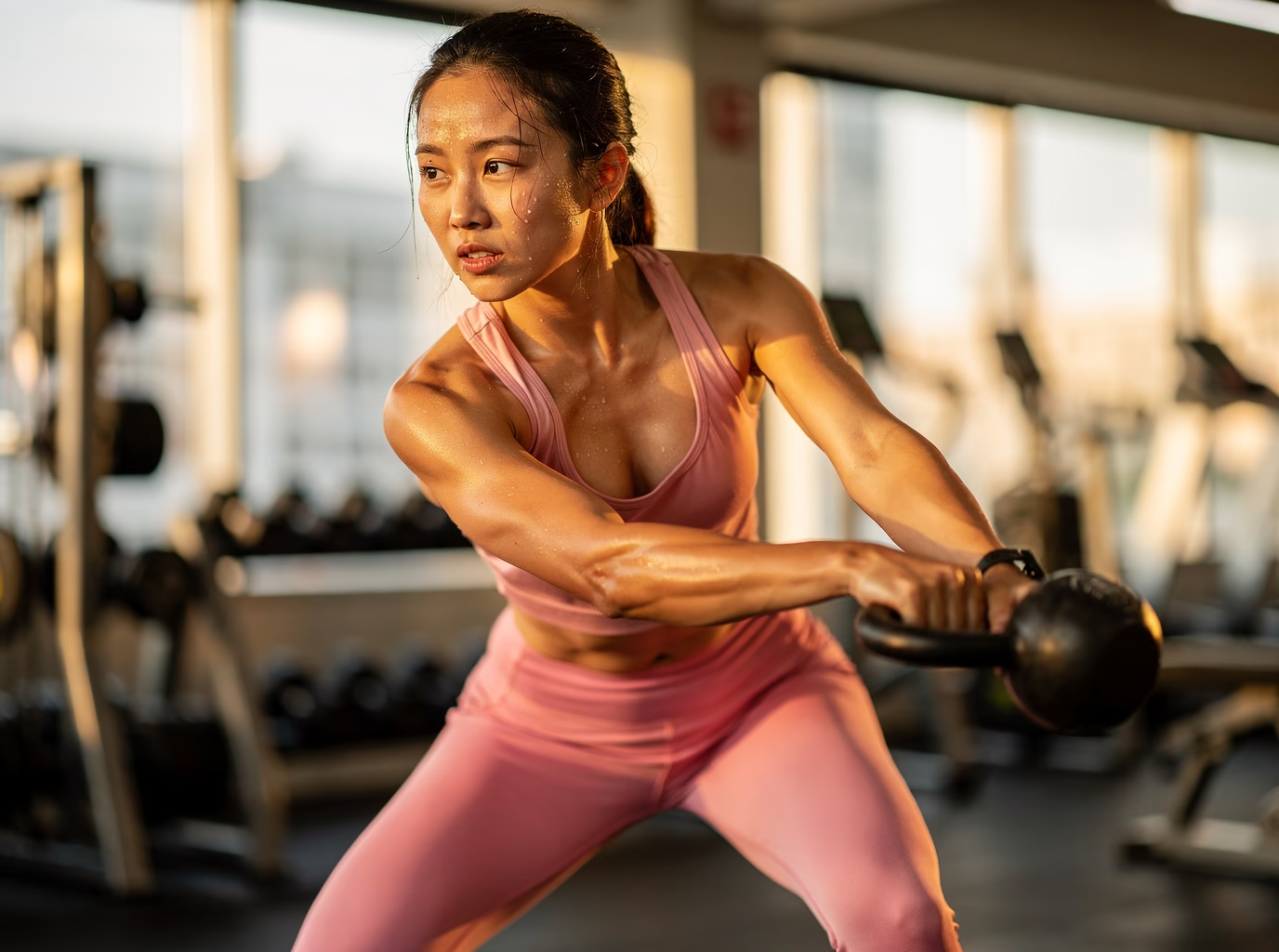
Skin is your largest organ.
Leggings sit closer to it than almost anything else you wear. They hug your hips. They cling to your thighs. They wrap your calves from knee to ankle without a gap for air.
You sweat. The fabric dampens. Warmth and moisture open your pores. Synthetic fibres trap both heat and humidity against you for hours at a time.
Even your favourite bra has more breathing room. Even skinny jeans have seams and structure that shift as you move. Leggings stay put. They maintain continuous contact across every inch they cover.
A loose linen shirt on a cool day barely brushes your skin. Tight synthetic fibres on warm, damp skin for hours is another entirely.
It is physical. It is intimate. It is continuous. And it happens every single day you wear them.
What Those Chemicals Do to Your Body
Phthalates and PFCs are endocrine disruptors.
They slip into your system and mimic your hormones. They block the signals your body needs to stay balanced. You don’t feel the hit in the moment. You feel it in the long months of something not quite right. Fatigue that won’t lift. Moods that swing without cause. Skin that suddenly acts like it belongs to a stranger.
Your skin prickles. Red patches appear where the fabric grips tightest. Itch turns to rash. Contact dermatitis sets up camp along your waistband and behind your knees. You blame stress. You blame the weather. You buy a new moisturiser.
But here is what makes it worse.
Every exposure sensitises you. The more you wear them, the harder your body fights back. What started as a faint itch becomes a persistent burn. Your immune system learns to recognise the threat. It overreacts.
This is not one pair, worn once, to a single yoga class. This is hours. Every day. For years. Those chemicals do not wash out in one cycle. They accumulate in your wardrobe, in your routine, in the fabric itself.
Your skin has been trying to tell you. For a long time.
What Changes When You Switch to Organic Leggings
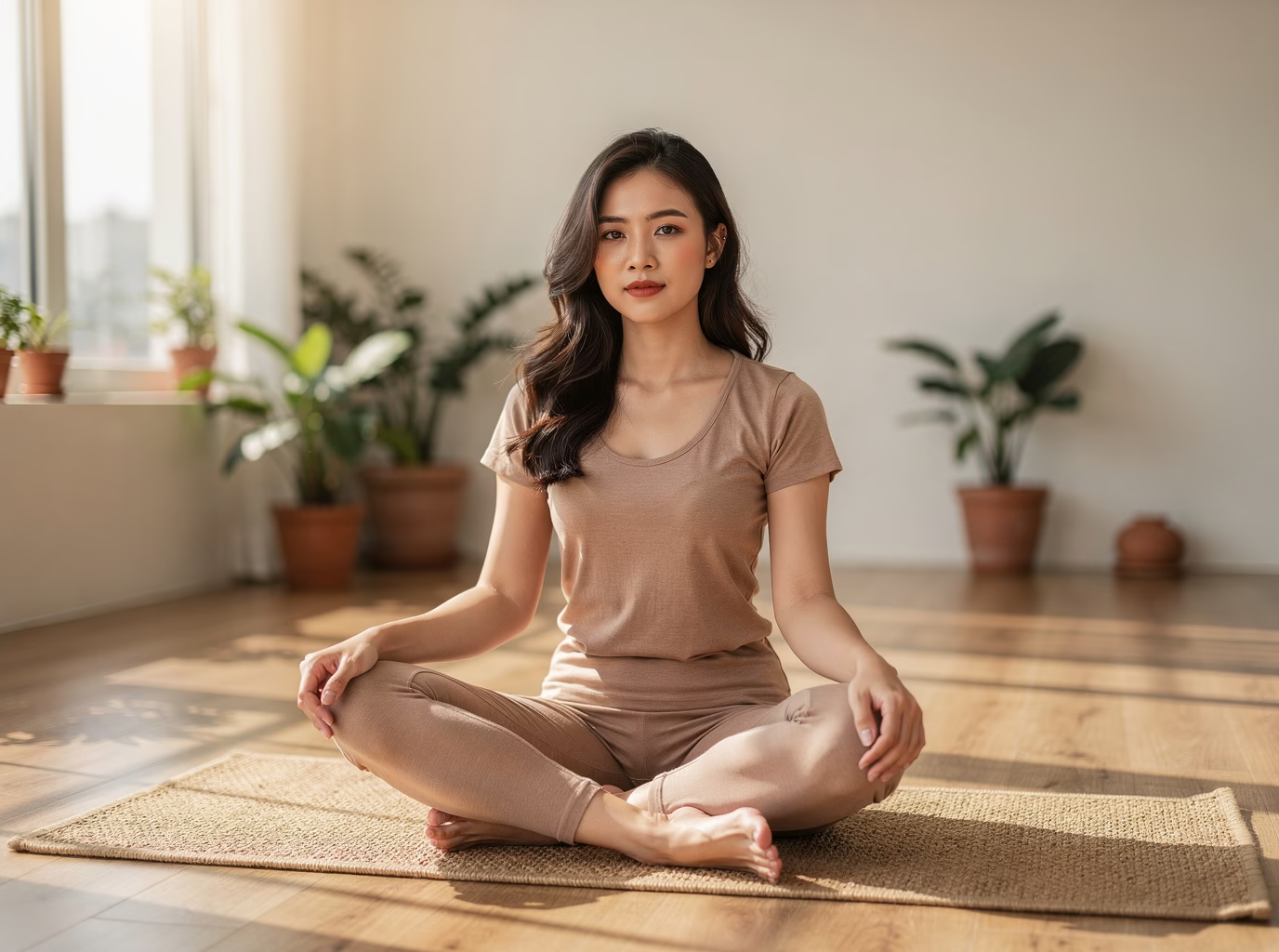
When you switch to organic leggings, the first thing that changes isn’t how they feel.
It’s what stops happening.
The chemical load is gone. The daily absorption stops. Your skin stops being a sponge for someone else’s manufacturing shortcuts. You work out for your health — and this time, your leggings aren’t quietly working against you.
That is the real payoff. Everything else is just proof you made the right choice.
Now picture pulling on a pair of organic cotton leggings. The waistband settles without that synthetic grip. Air moves through the weave immediately. Your skin breathes instead of suffocating.
In a warm room, you stay cool — not the artificial cool of air conditioning, but the natural cool of a fabric that lets heat escape instead of sealing it against your thighs. When you sweat, the cotton absorbs the moisture instead of trapping it in a slick pool against your body.
You feel dry. You feel clean. The softness is there — real softness, the kind that makes you notice your own skin — but what you feel first is the absence. No chemical film. No plastic-adjacent residue. No faint synthetic smell when the fabric warms against you.
It feels like something that grew in a field. Not something that poured out of a refinery.
Switch to organic bamboo, and the sensation deepens. Silkier. Cooler. A slicker, more fluid drape that follows your body instead of gripping it. When you walk, they sway. When you sit, they do not dig into your waist.
Bamboo fibres create a weightlessness synthetic fabric tries to fake and never manages. They stay cleaner for longer. Naturally antibacterial, they resist odor without chemical sprays. In summer heat, bamboo leggings feel like wearing shade.
Your skin stays calm. Unprovoked. You forget you are wearing them, and that forgetting is its own kind of relief.
Then there is hemp. Structured at first. Durable. Honest in the hand. It does not pretend to be something it is not. But hemp holds a secret synthetics cannot touch: it softens with every single wash.
It gets better with age instead of breaking down. Over months, that structured integrity mellows into something uniquely personal. The pair you wear next year will feel better than the one you bought last month. The edges round. The drape deepens. The fabric becomes yours.
And knowing that durability means fewer replacements, fewer compromises — that is its own kind of health.
These materials share something synthetics lost. When you run your hand down your leg, you feel fibre. Plant. Something that grew in soil and sun. That matters in ways your fingertips understand before your mind catches up.
The fields where your leggings started are cleaner too. No pesticides in the water that feeds them. No poison cloud over the farm. When you walk the trail, stretch in the field, breathe the morning air — your body is cleaner, and the world you move it in is better for what you’re wearing.
You don’t just wear organic leggings.
You live in them.
What Organic Leggings Are Made From

So what are you actually pulling on?
Organic cotton. Organic bamboo. Hemp. Linen. Natural fibres grown without synthetic pesticides, without GMOs, under farming standards that treat the soil like something worth keeping alive.
The farmer used crop rotation. Compost. Biological pest control. Not chemical tanks rumbling across the field at dawn. The soil was managed, not mined. The water was conserved, not flushed with runoff. And a third party actually walked that field to verify it.
That is what makes them organic. The fibre started clean. No synthetic pesticides. No chemical fertilisers. No genetically modified seeds designed to survive heavier spraying. Just farming under rules that prohibit the shortcuts conventional agriculture relies on. No magic. No miracle. Just a field managed with intention.

Organic does not mean chemical-free. The process still uses chemicals — restricted ones, monitored ones, less harmful ones — but they are still there.
Organic does not automatically mean non-toxic either. Your unique skin chemistry decides what works for you, not a label.
And most organic leggings are not fully biodegradable. They still contain five to ten percent elastane for stretch. That synthetic core remains.
But organic leggings are not claiming perfection. They are claiming better. A lower chemical load. A cleaner start. A softer, more honest experience against your skin.
It makes them an honest one.
You Know Enough to Choose
You now know what conventional leggings carry against your largest organ. You feel what those hours of continuous contact actually cost your body. You have seen — and almost touched — what switching changes. You understand exactly where organic shines and where it refuses to pretend. That is the full picture. That is enough to choose with confidence.
Organic Is One Question for Leggings — Not the Only One
Organic tells you how the fibre was farmed. It’s one of five questions that determine whether your leggings are genuinely clean. Here’s how the others fit.
Organic Leggings
Certified organic farming — no synthetic pesticides, no GMOs, third-party verified. Your organic leggings start at the field, not the factory: certified organic fibre means the cotton or bamboo was grown clean from the start. You’re here.
Non-Toxic Leggings
What’s in the finished product. Organic doesn’t automatically mean non-toxic — that’s a separate test. If you wear non-toxic leggings, you know exactly what’s touching your skin: no PFAS, no formaldehyde, no heavy metals.
Read more →Sustainable Leggings
The full environmental footprint. Organic is one dimension; sustainability is the whole picture. When you choose sustainable leggings, the entire chain matters — carbon, water, waste, fair labour, and how long the garment actually lasts.
Read more →PFAS-Free Leggings
No forever chemicals. Organic eliminates pesticides, but PFAS-free needs its own verification. With PFAS-free leggings, you’re protected from chemicals that never break down — the ones that accumulate in your body and the environment.
Read more →What Organic Certifications Mean
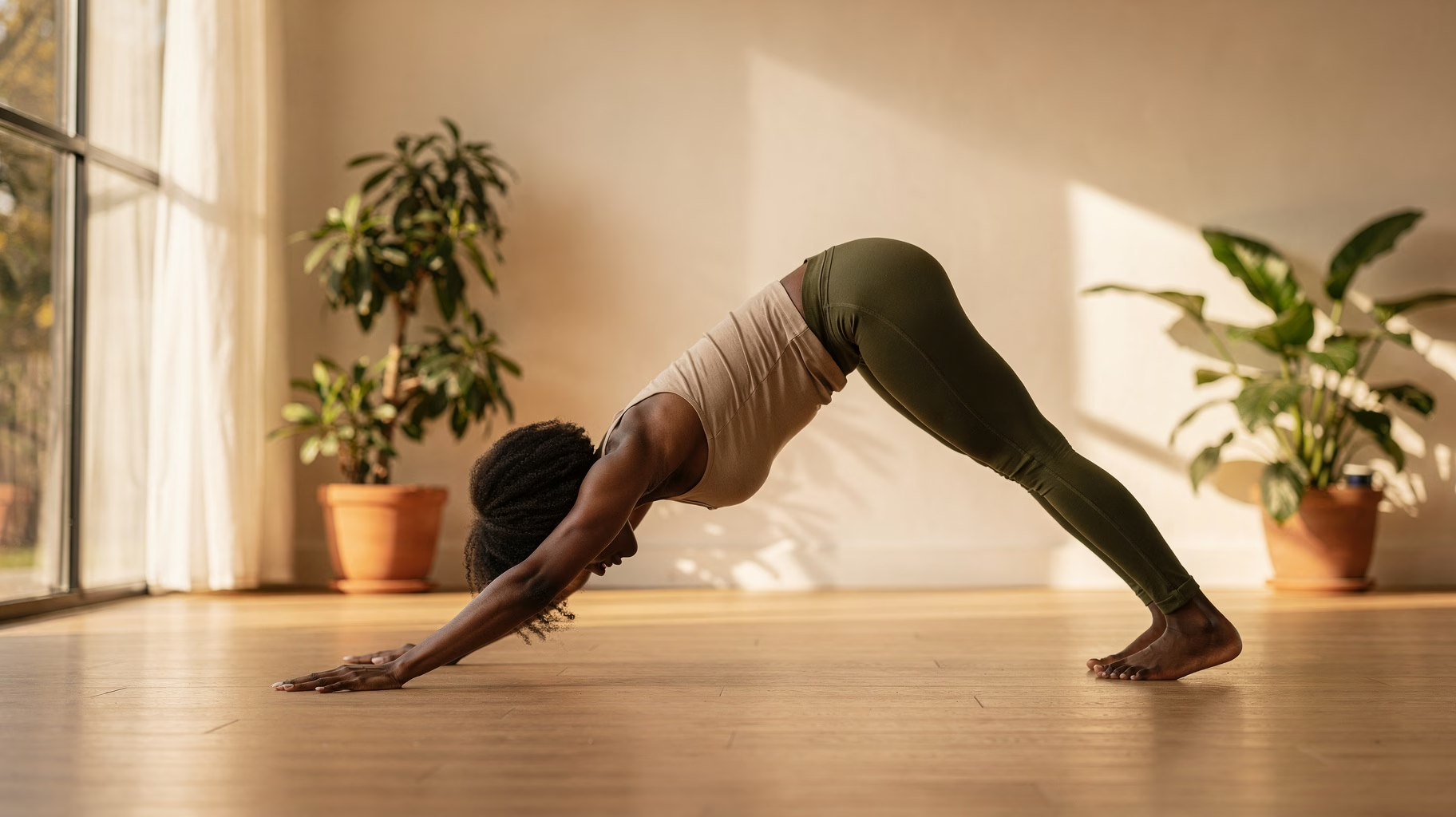
An organic cotton label tells you the fibre was grown without synthetic pesticides or GMOs — but that promise ends at the farm gate. These seals verify the cotton made it through spinning, dyeing, and finishing without losing its organic integrity along the way.
GOTS — Global Organic Textile Standard
The strongest organic fibre guarantee available. GOTS follows the cotton from harvest through every stage of manufacturing, ensuring no toxic processing chemicals were introduced that would compromise the organic claim.
OCS — Organic Content Standard
Tracks the exact percentage of certified-organic fibre in your leggings through each link in the supply chain. For blends that fall below GOTS thresholds, OCS is how the organic content is still independently verified.
ROC™ — Regenerative Organic Certified
Goes a step beyond organic — the farms growing this cotton are actively rebuilding soil health and pulling carbon from the atmosphere while producing the fibre for your leggings.
OEKO-TEX Standard 100
Confirms the finished organic cotton fabric was lab-tested for chemical residues — catching anything that could have slipped in during dyeing or finishing and undermined the organic promise.
B Corp
Verifies the company making your organic leggings operates with real social and environmental accountability — not just a product-level badge, but a whole-business commitment to doing better.
The Best Stores for Organic Leggings
These stores all ship globally and carry products backed by third-party certifications — not every item from every brand qualifies, so you still have to check the item before you buy it. We verified each store’s fabric composition, certification records, and product range so you can shop with full confidence in what you are wearing next to your skin.
MATE the Label
- Full-length leggings
- Midi leggings
- Crossover leggings
- Bootcut pants
- Sports bras
- Biker shorts
- Unitards
- Tanks
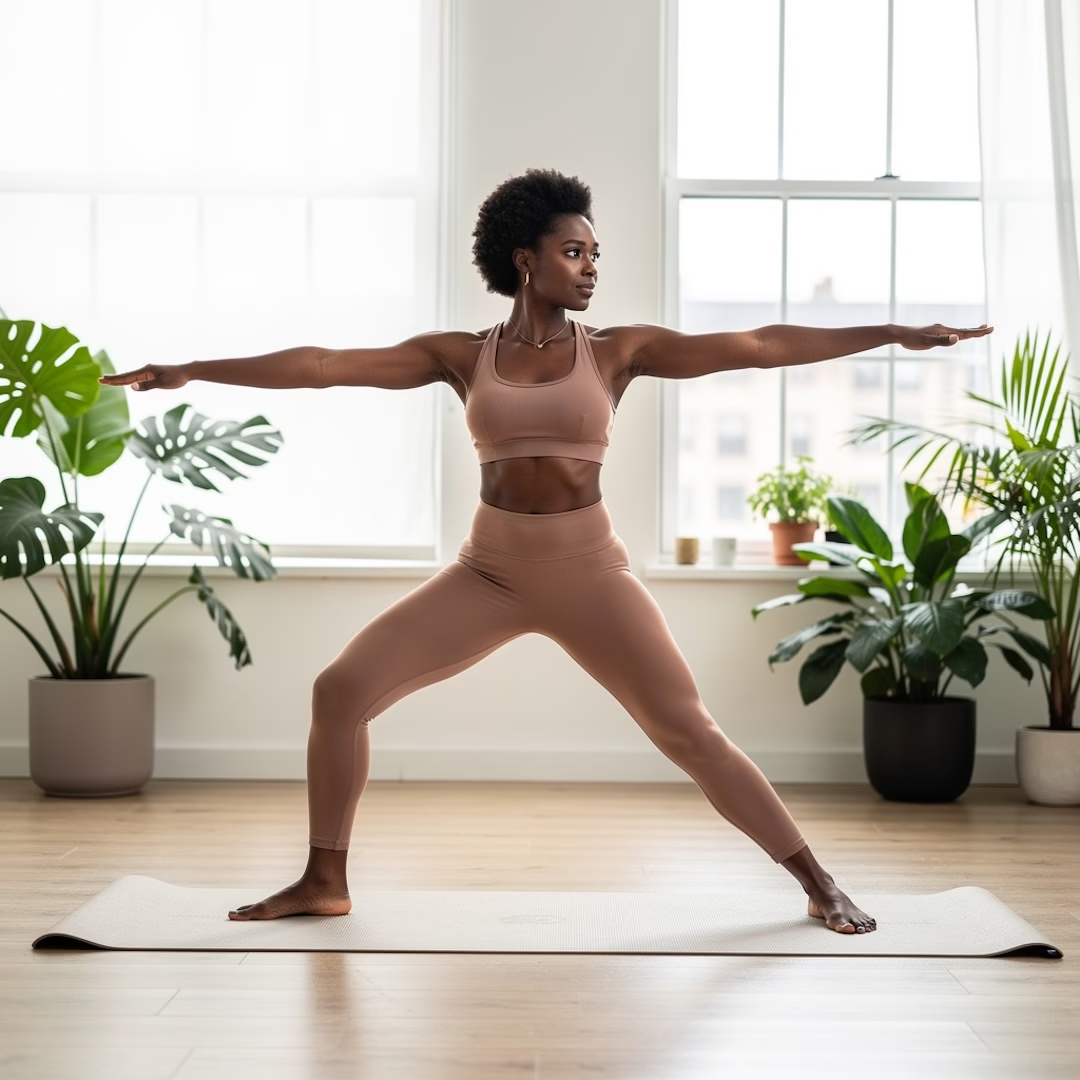
MATE the Label makes GOTS-certified organic cotton activewear designed for women who will not compromise between their values and their wardrobe. Their Organic Stretch fabric is 92% organic cotton and 8% spandex, offering natural softness with enough stretch for yoga, Pilates, and everyday movement. Every piece is made without PFAS, BPA, pesticides, and formaldehyde, and the brand is a Certified B Corp committed to clean production from fiber to finished garment.
Price range: $58-$108 (leggings $88-$108)
Shop MATE the Label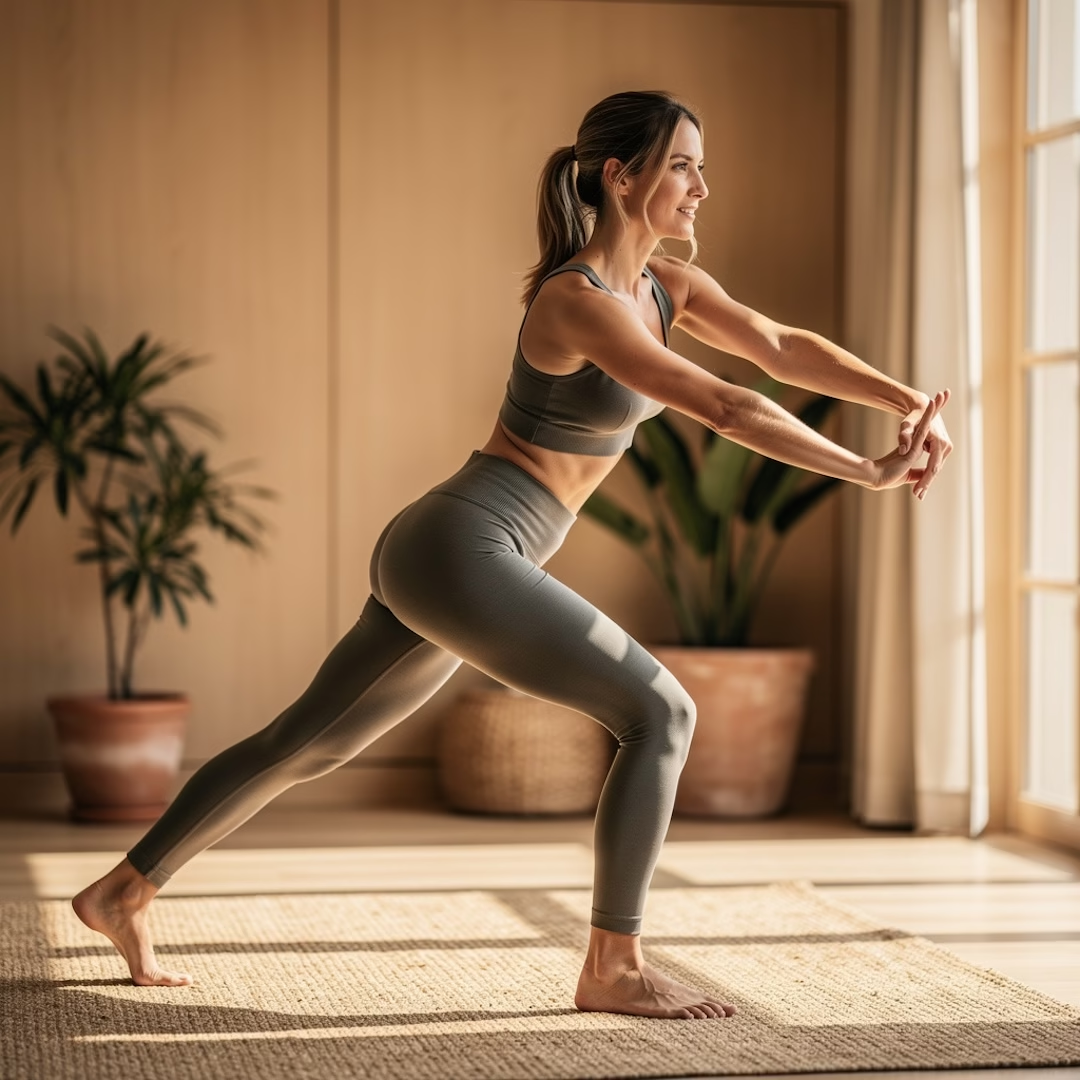
Lezat
- 7/8 leggings
- Bootcut flare leggings
- Capri leggings
- Jumpsuits
- Sports bras
- Tanks
- Joggers
Lezat is a Los Angeles-based brand making activewear from GOTS-certified organic cotton with a 95% organic cotton and 5% bio-based spandex blend. Their leggings are designed for women who want natural-fiber performance wear without the plastic feel of conventional activewear. Lezat is female-founded, with Climate Neutral certification reported through December 2024, and production in California that keeps their carbon footprint low and their quality standards high.
Price range: $48-$98 (leggings $88-$98)
Shop Lezat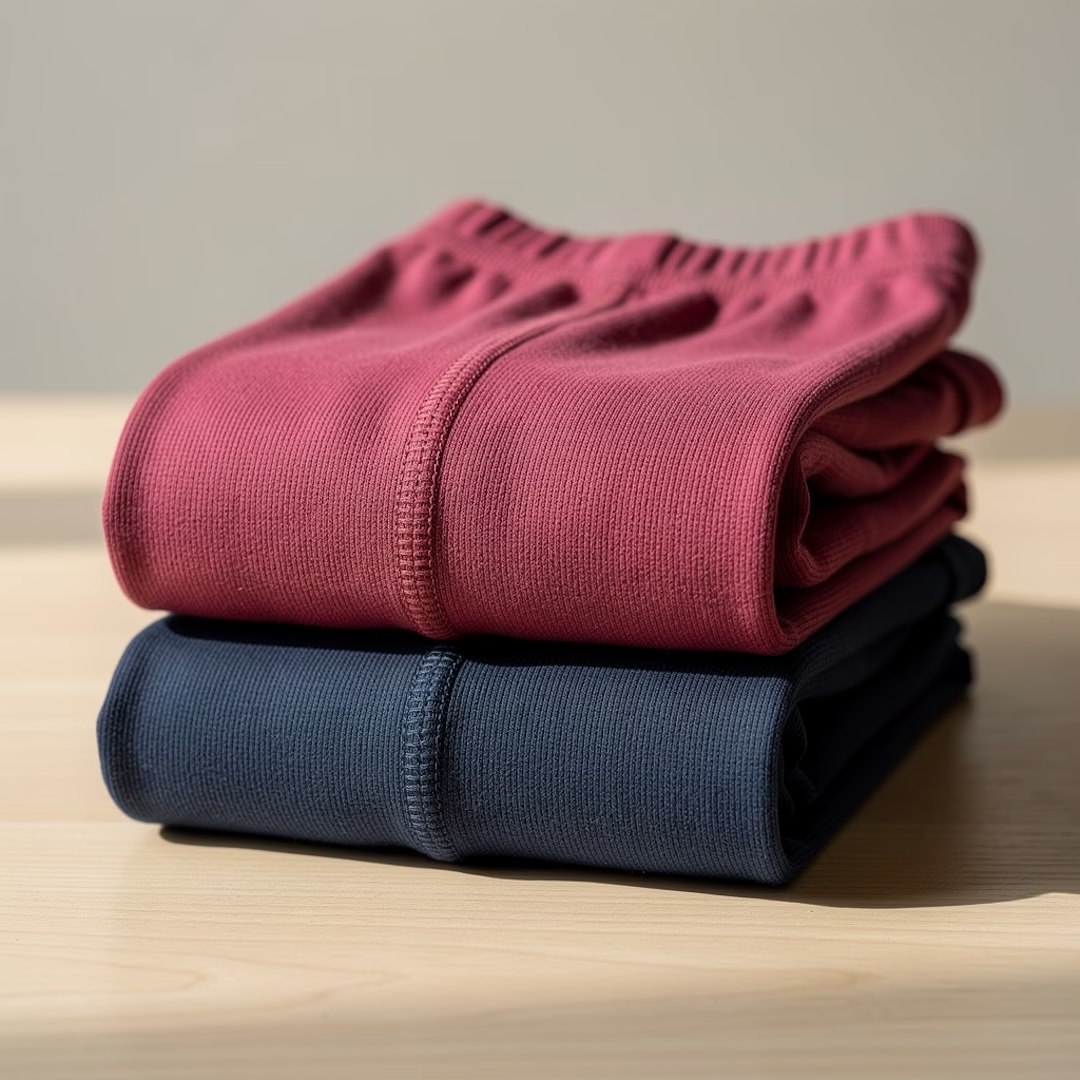
Organic Basics
- Active leggings
- Flare leggings
- Wide leg pants
- Joggers
- Drawstring pants
- Sweatpants
- Bike shorts
- Shorts
Organic Basics is a Copenhagen-based Certified B Corp carrying GOTS-certified organic cotton bottoms alongside GRS-certified recycled nylon activewear. Their organic cotton range includes wide leg pants, joggers, and sweatpants, while their Active Leggings are made with 60% recycled nylon — so check the product label for the relevant certification on each item. The brand is also a 1% for the Planet member.
Price range: $29-$90 (organic cotton bottoms $38-$90)
Shop Organic BasicsFrequently Asked Questions
The questions you’re probably asking after reading all of that.
Are organic leggings worth the price?
That depends on what you value. If what touches your skin for hours every day matters to you — and after reading this page, it probably does — then yes. Organic leggings cost more because the fibre costs more to grow: no synthetic pesticides, no chemical fertilisers, third-party verification at the field. You’re paying for a cleaner start, a lower chemical load, and a garment that isn’t quietly working against your body while you wear it.
Do organic leggings last as long as synthetic ones?
They last differently. Organic cotton softens with every wash — it gets more comfortable over time, not less. Hemp is exceptionally durable and gets better with age. The trade-off is stretch: most organic leggings contain 5–10% elastane for recovery, and that elastane eventually relaxes. You may replace them sooner than a nylon-spandex pair, but you’ll enjoy wearing them more while you have them.
Can I work out in organic leggings?
For yoga, Pilates, walking, lounging, and everyday wear — absolutely. Organic cotton and bamboo are breathable, soft, and comfortable for hours. For sprint intervals, hot spin classes, and high-sweat intensity training, a technical synthetic legging is likely the better tool. Organic leggings absorb moisture rather than wicking it quickly, which matters less in a gentle yoga session and more in a heavy sweat session.
Why not just buy any cotton leggings?
Conventional cotton is natural, but it’s one of the most chemically intensive crops in the world. It uses roughly 16% of global insecticides despite occupying only about 2.5% of farmland. The pesticide load, the heavy-metal dyes, the formaldehyde finishes — all of that touches your skin. Organic cotton eliminates the pesticide load at the source and restricts what chemicals can touch the fibre through processing. The difference isn’t theoretical. It’s what’s pressing against your body right now.
Are organic leggings actually better for the environment?
On the farm, yes — and that’s where the clearest difference is. No synthetic pesticide runoff into waterways. No poison cloud over the fields where the crop grows. A meta-analysis of 94 studies found roughly 30% higher species richness on organic farms. Water use is more nuanced: organic relies more on rainfall, but yields can be lower. The honest answer is that organic farming is cleaner, but it’s not a zero-impact claim. It’s a better one.
Will organic leggings irritate my sensitive skin?
Less likely — but not guaranteed. Organic certification restricts which chemicals can touch the fibre, which removes the most common irritants: formaldehyde finishes, heavy-metal dyes, and synthetic antimicrobials. But sensitivities are personal. You can react to cotton itself, to the natural rubber in waistband elastic, or to trace residues that pass even strict standards. Your skin chemistry decides what works for you — a label helps, but it doesn’t override your body.
Latest Articles
What women are reading about non-toxic and organic leggings
Microplastics in Your Leggings May Be Stealing the Trace Metals Your Body Needs
New Russian Academy Research Reveals How Synthetic Fabric Fibers Disrupt Blood Protein Function and Mineral Delivery Your leggings go on every morning without a second…
Read more
The Hidden Hormone Disruptor in Your Gym Bag: Why Synthetic Leggings Spell Trouble After 50
How Endocrine-Disrupting Chemicals in Synthetic Workout Fabrics Bioaccumulate in Midlife — and the Certified Clean Alternatives That Remove the Risk Your leggings wick sweat. They…
Read more
Is Bamboo Fabric a Lie? What “Eco” Leggings Hide
Bamboozled: Why Your "Eco" Leggings Are a Chemical Con Job — and What to Wear Instead You paid extra for bamboo because you wanted leggings…
Read more